

Many managers live in a perpetual firefighting mode. They stay late into the night, work weekends, and sincerely believe that without their personal intervention, the company will simply collapse. Their main motto is: "If you want something done right, do it yourself." However, the harsh truth of management is different: if you do the work for your employees, you cease to be a leader and become a highly paid contractor.
What is delegation?
Delegation is often mistakenly understood as simply handing out instructions. In fact, delegation is the process of transferring not only tasks but also authority (responsibility) from a manager to an employee.
The main goals of this process are:
- Freeing up the manager’s time to solve strategic tasks (business development, new products, planning).
- Development of employee competencies.
For a strong professional, a new, challenging task from a manager isn't a stressful experience, but an opportunity for professional growth. If employees are stuck in the same old routine day after day, they deteriorate.
Anti-delegation: The micromanagement trap
The complete opposite of effective delegation is micromanagement (an autocratic management style). This is a situation where a manager delegates a task but doesn't allow any freedom, controlling every step.
A practical example
The head of a large IT company (approximately 500 people) personally approved the design of every employee's birthday card. He could make 10-15 revisions to each card. This obsession with control slowed down all processes within the company. Lines of managers formed to get his approval only late at night.
Micromanagement ties the team down. Employees become accustomed to not having to think: the boss will do everything anyway. As a result, the team loses initiative, and the manager inexorably moves toward burnout.
How to delegate at Google: 7 golden rules
For Google, the ability to delegate is the number two skill (after coaching) among the competencies of an ideal leader. In a large-scale internal study (Project Oxygen), Google demonstrated that leadership teams that don't micromanage are the most productive.
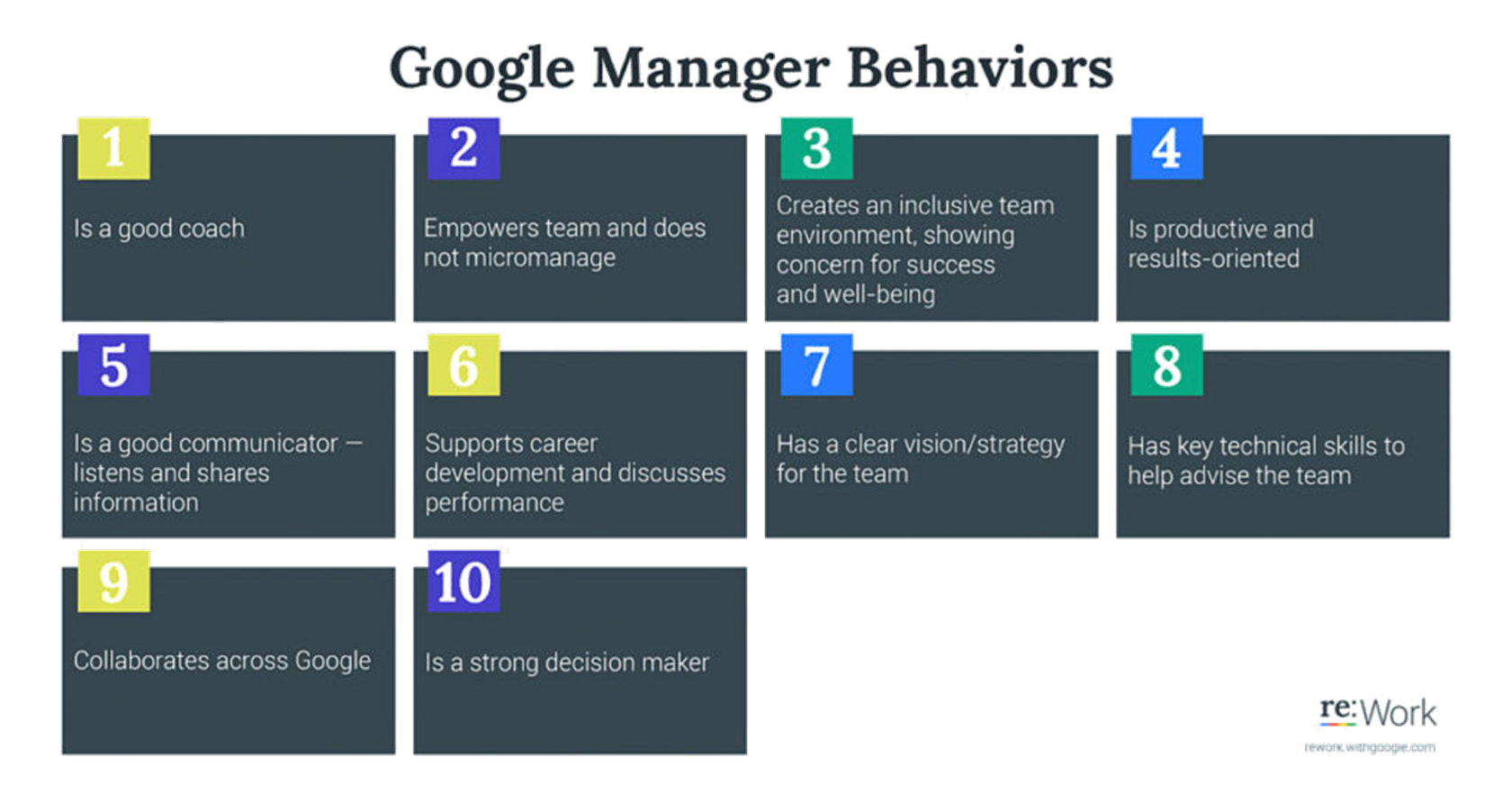
7 steps to delegating according to Google standards:
- Explain "Why": Tell the employee why this task is important to the company and how it will help them grow.
- Describe the details: Clearly define the boundaries of the new responsibility.
- Discuss the outcome, not the process: Explain what you expect as the outcome, but don't dictate how exactly to achieve it. Leave room for independence.
- Maintain a dialogue: ask questions, make sure the employee has all the resources (information, access) to complete the task.
- Create a safe environment: a new task is stressful for an employee. They should know they can come to you for advice without fear of criticism or punishment for mistakes.
- Show the impact on the team: Explain how this task relates to the success of other departments.
- Set milestones: Agree on intermediate deadlines (milestones) to keep your watch on track without resorting to total control.
Situational Leadership: Why You Can't Delegate Everything at Once
A common mistake new managers make is to throw a task at an inexperienced employee and tell them to "figure it out yourself." When the employee fails, the manager becomes disillusioned with the delegation tool itself.
According to the Hersey-Blanchard situational leadership model, the degree of control depends on the employee's maturity:
- Stage 1 (Novice): High motivation but low competence. It's too early to delegate. Clear instructions are needed (directive style).
- Stage 2 (Disappointment): The employee has encountered their first difficulties, and motivation is waning. The manager needs to provide support and mentoring.
- Stage 3 (Growth): Competence increases. The manager begins to gradually reduce control, granting more freedom.
- Stage 4 (Master): High motivation and high competence. This is where full delegation occurs.
Top 5 myths that prevent you from delegating
- "I'll do it faster and better." That might be true at first. But if you invest the time to train an employee once, you'll save hundreds of hours in the long run. Moreover, a talented employee may eventually surpass you in their narrow specialization.
- "My people are already overloaded."
- This is often an illusion of poor organization. Use a RACI matrix to redistribute roles.
- "I will lose control of the process."
- Delegating doesn't mean abdicating responsibility. You maintain control through a KPI system and regular synchronization (for example, sprints in Agile).
- "Setting a task will take longer than completing it."
- Use the SMART (Specific, Measurable, Achievable, Relevant, Time-Bound) goal setting rule. A clear objective eliminates rework.
- "The staff can't handle it."
- If you don't trust your team's competencies, the problem isn't delegation, but a lack of coaching and development within the company.
HBR Metaphor: Who Will Get the Monkeys?
One of the most famous articles in the Harvard Business Review describes time management through the metaphor of "monkeys." A monkey represents a problem or task.
Imagine you're walking down the hallway. A coworker approaches you and says, "Boss, we have a problem with a client..." You listen and respond, "I'm rushing to a meeting right now. Let me think about it and let you know what to do later."
What happened in that second? The monkey jumped from the employee's back onto yours. Now you (the boss) owe the subordinate something. The employee will periodically pop into your office and ask, "So, have you thought about it?" If you have seven subordinates, and each one gives you three monkeys a week, by Friday evening you'll be saddled with 21 other people's problems. This is why employees leave for the weekend with a clear conscience, while managers sit in the office until late at night.
How to deal with monkeys?
- Never take a task back. If an employee comes to you with a problem, say, "Describe it to me in a letter and offer two possible solutions." The employee will keep the monkey.
- Solve problems only in pre-scheduled meetings (1-on-1). Don't let people "throw" problems at you in the hallway.
- Cultivate initiative. Employees shouldn't come to work asking, "What should I do?" but rather with the statement, "Here's the problem, here's my action plan, I'm getting started."
Delegation isn't just a time management tool. It's a fundamental skill that increases a manager's personal effectiveness by at least 20%, prevents burnout, and transforms a group of disparate performers into a strong, self-sufficient team. Free your calendar from other people's "monkeys" and focus on what businesses are really paid for—strategy and growth.
✈️ The course Effective Delegation: How to Delegate Tasks and Manage Processes will give you effective tools and knowledge to unburden yourself and free up time for truly important tasks.