

The business world has changed. In the era of the subscription economy and fierce competition, the old "sell and forget" model no longer works. Customers have become a company's most valuable asset: difficult to find, expensive to acquire, and catastrophically easy to lose.
That's why a new figure is replacing support managers: the Chief Customer Officer (CCO) . This isn't a "complaints chief." This is a business leader who manages revenue from the current customer base, influences product development, and sits at the CEO's right hand.
In this article, we'll take a detailed look at the anatomy of this role, from salaries and reporting structure to a specific competency model and metrics.
1. Who is a CCO and why is it the “Boss of Customer Success”?
The Chief Customer Officer (CCO) is a senior manager responsible for the strategy of interaction with customers at all stages of their life cycle.
What is another name for the role?
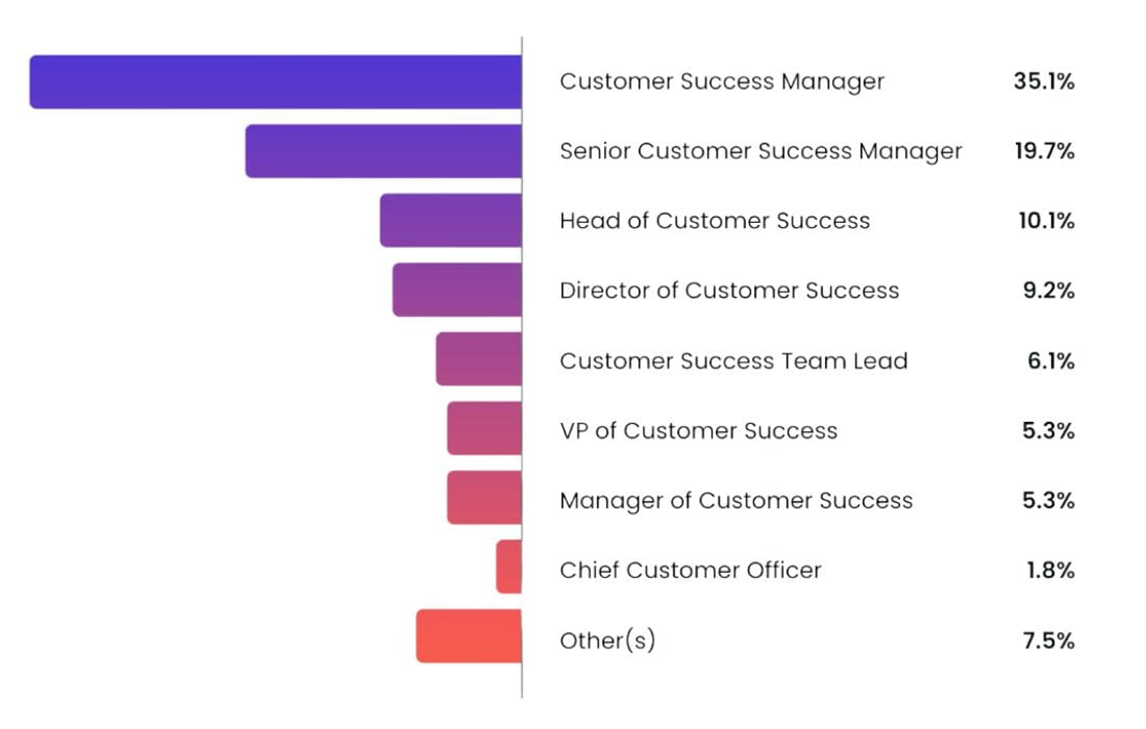
Evolution of the role
Previously, customer care was a reactive function (Support): “It broke for me – we fixed it.”
Today, it's a proactive function (Success): "We'll make sure you get the most value from the product and don't want to leave."
Statistics on the role's growth in popularity:
- 22% of Fortune 100 companies have already introduced the CCO position.
- 10% of Fortune 500 companies have a CCO.
- This is the "youngest" role in the C-Suite: the average tenure is only 29 months (because the role is new, and the demands on it are rapidly increasing).
Where is CCO most in demand?
The role is dominant in high-tech and service industries:
- IT and Communications (SaaS): 33% (Salesforce, HubSpot, Slack).
- Finance (FinTech): 15.7%.
- Healthcare: 12%.
2. Anatomy of a position: salaries, subordination, team
How much does a CCO earn?
According to Glassdoor (USA), the median salary for a CCO is $366,000 per year.
This places the CCO on par with (and sometimes even above) chief operating officers (COOs) and chief marketing officers (CMOs). The reason is simple: the CCO manages retention revenue, which in mature companies accounts for 70-80% of total revenue.
Who does it report to?
The role status is confirmed by the subordination structure:
- 30% of CCOs report directly to the chief executive officer (CEO).
- Less often - to the president, COO or CRO (Chief Revenue Officer).
- Very rarely - CMO or CFO (this is considered an outdated model).
Team size
Despite their high status, the CCO does not necessarily manage an army of employees.
- The average size of a management team (direct reports) is 2–5 people.
- Its vertical may include the following departments: Customer Success, Customer Support, Professional Services, Onboarding, Customer Operations.
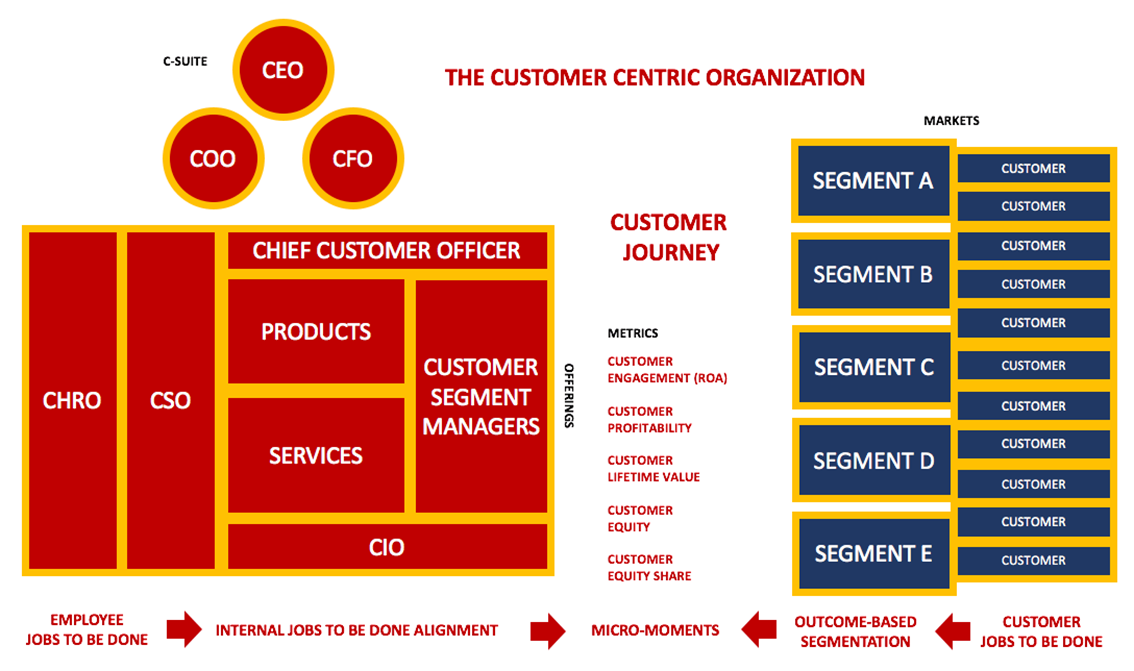
3. Four pillars of CCO competencies (Rod Cherkas's Model)
To be an effective CCO, it's not enough to simply be empathetic. Rod Cherkas (author of The Chief Customer Officer Playbook) identifies four strategic competency areas. Test yourself with this checklist:
👉🏻 Chief Customer Officer Check-list - Google Sheets
I. Thought Leadership
The CCO must be a visionary, not just an implementer.
- Benchmarking: You look for industry best practices and implement them.
- Market training: you share your expertise with clients, speak at conferences, and write articles. Clients see you as a consultant, not a salesperson.
- Innovation: You offer new service models that become the industry standard.
II. Customer Relationships
This is the ability to build relationships at the C-Level (Executive to Executive) level.
- Strategic partnership: You understand your client's business goals better than they do themselves. You know how your product will help them achieve their KPIs.
- Feedback: You have a systemic feedback collection process (Voice of Customer), which has a real impact on product development.
III. Strategic Influence
The ability to influence the development vector of one’s own company.
- Participation in strategy: The CCO participates in strategy sessions equally with the founders.
- Change management: if the market changes (crisis, new technologies), the CCO adapts the service model.
- Cross-functionality: The CCO removes barriers between Product, Sales, and Marketing to ensure a seamless customer experience.
IV. Operational Influence
Ability to manage numbers and processes.
- Linking metrics to money: You can explain to the CFO how increasing NPS by 5 points will impact the company's EBITDA.
- Cost management: you scale support not by expanding your staff, but by implementing technologies (AI, Self-Service).
- Emergency Action Plan: You have ready-made scenarios (Playbooks) for crisis situations with clients.
4. Key CCO Metrics (KPI Dashboard)
The CCO's work is measured by specific metrics. Over the past year, the focus has shifted from "satisfaction" to "money."
Top 3 Growing Metrics (in order of importance):
- Net Revenue Retention (NRR): the most important metric in SaaS. It shows how much revenue remains from a customer cohort, taking into account churn and upselling. If NRR > 100%, the business is growing even without new sales.
- Gross Retention Rate (GRR): the percentage of revenue retained, excluding upsells. This indicates how well you retain the contract's value.
- Churn Rate: The percentage of customers who leave.
Minor but important:
- CSAT/NPS: Satisfaction and Loyalty.
- Time to Value (TTV): How quickly a customer receives the first value after a purchase.
- Customer Health Score: a comprehensive index of customer health (login frequency, feature usage, support tickets).
5. Technology and AI: What is the CCO armed with?
The CCO is a technocrat. The percentage of process automation in leading companies reaches 120% (meaning the use of multiple layers of automation).
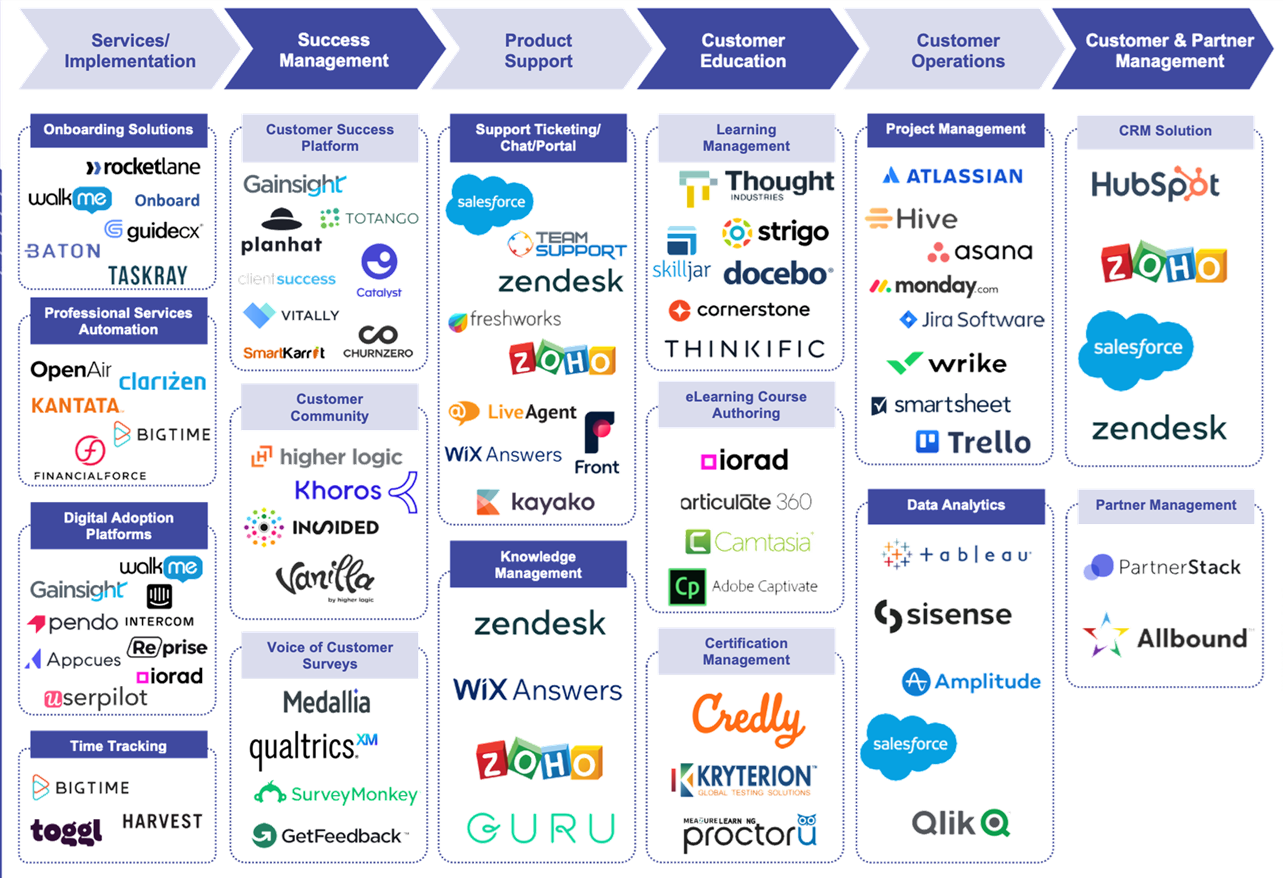
The CCO technology stack includes:
- CRM: (Salesforce, HubSpot) - a single source of truth.
- Customer Success Platforms: (Gainsight, Totango) – for monitoring customer health.
- Support & Ticketing: (Zendesk, Intercom).
- AI & Analytics: Artificial intelligence for predictive churn analysis (AI predicts who will leave before the customer even thinks about it).
Summary: Career Path to CCO
How to become a CCO? The typical path takes about 10 years:
- Start: Customer Success Manager (CSM) or Account Manager.
- Growth: Team Lead / Head of Customer Success.
- Top level: VP of Customer Success.
- Top: Chief Customer Officer.
This role is perfect for those who balance empathy with the rigorous logic of business metrics. If you can turn customer love into revenue, this is your ideal career path.
🚩 Welcome to the Chief Customer Officer course: How to Create Outstanding Customer Service
🔥 After completing the course, you will be able to:
🔹 Create and implement customer service strategies that improve business results;
🔹 Develop your team and increase its effectiveness;
🔹 Use key metrics to monitor service quality;
🔹 Handle conflicts and difficult customers professionally and confidently;
🔹 Implement innovative approaches that will make your service competitive.
🔹 Create and implement customer service strategies that improve business results;
🔹 Develop your team and increase its effectiveness;
🔹 Use key metrics to monitor service quality;
🔹 Handle conflicts and difficult customers professionally and confidently;
🔹 Implement innovative approaches that will make your service competitive.